A Thoughtful Choice Books & Games
Ages 8–10: How Things Work
Ages 8–10: How Things Work
Free U.S. shipping
Couldn't load pickup availability
Books in this sampler (in thoughtful reading order):
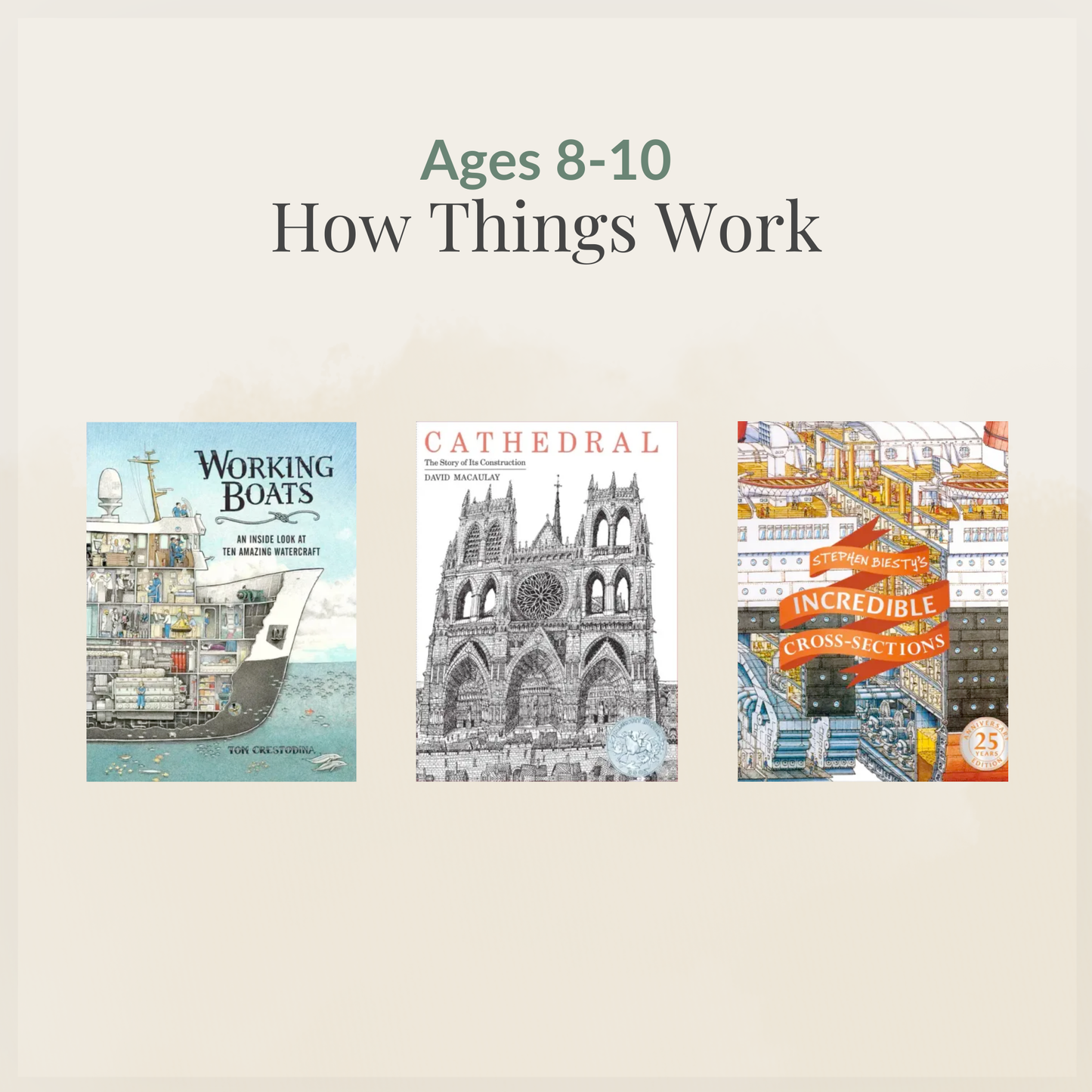
- Working Boats by Tom Crestodina
- Cathedral by David Macaulay
- Stephen Biesty’s Incredible Cross-Sections by Stephen Biesty
(This order moves from real-world mechanical systems into architectural design and finally into highly detailed visual cross-sections that stretch observation and analytical thinking.)
Who this sampler is for:
This sampler is designed for boys and girls ages 8–10 who are naturally curious about how things are built, powered, engineered, and designed. It’s an excellent fit for hands-on thinkers, future engineers, visual learners, and children who love asking “But how does it actually work?”
If your child was fascinated by the mechanical details in The Way Things Work by David Macaulay, this sampler offers a natural next step — with richly illustrated books that invite careful observation, logical thinking, and deeper understanding.
What’s inside:
This sampler brings together three beautifully illustrated nonfiction books that reveal the hidden structures behind the world around us. Working Boats introduces tugboats, fishing vessels, ferries, and cargo ships, showing how each one is designed with purpose — from engines and hull shapes to the jobs they perform on the water. Cathedral explores how medieval builders designed and constructed towering Gothic cathedrals without modern technology, walking readers step by step through planning, engineering, teamwork, and problem-solving across generations. Stephen Biesty’s Incredible Cross-Sections completes the set with breathtakingly detailed cutaway illustrations of ships, castles, aircraft, and machinery, encouraging readers to slow down, study components, and see how individual parts function together as a system.
Together, these books help children understand that great structures and machines are built through careful design, collaboration, creativity, and persistence.
Why this sampler works:
- Builds spatial reasoning and visual analysis skills
- Strengthens attention to detail and careful observation
- Encourages curiosity about engineering and architecture
- Supports STEM learning through rich, narrative nonfiction
- Develops vocabulary related to mechanics, design, and structure
Because these books invite lingering and rereading, they naturally build focus and intellectual stamina. They are especially powerful for children who may not gravitate toward traditional narrative fiction but thrive on understanding systems and design.
Why A Thoughtful Choice picked these:
These titles were chosen because they respect growing minds. They are beautifully produced, information-rich books that reward patience, curiosity, and careful thinking. They highlight human ingenuity, collaboration, and the quiet brilliance behind the structures and machines we often take for granted.
This is nonfiction that feels substantial — the kind of books children return to again and again, discovering new details each time.
What to read next:
Readers who enjoy this sampler often love Ages 8–10: Adventure & Discovery for stories of exploration and real-world problem-solving, or Ages 11–13: Growing Up in History when they’re ready to explore how innovation, perseverance, and big ideas shaped different moments in history.
Share